Showing posts with label Fiction. Show all posts

Tuesday, April 26, 2011

Fiction/ Picture Book


Title: SantaKid

Author: James Patterson


About the Author: Not making any bones about his bid for success, James Patterson once declared he wanted to be known as the king of the page-turners. While that may seem like a pretty grand ambition, Patterson is as worthy of that title as any author working today.

Age Level: 5-8

Synopsis: This story is about a little girl named Chrissie and her parents, Santa Claus and Momma Claus. When Warrier Ransom, the boss of the Exmas Express Company decides to buy Christmas and rename it Exmas, Chrissie and her family can’t believe what is happening. Everything at the North Pole begins to change and it looks like Christmas is going to be ruined. Then Chrissie remembers something she learned from her dad and becomes Santakid. She delivers presents to all of the children on Christmas Eve!

Pre-Reading Activities: The importance of having courage and having respect for words of wisdom. What are words of wisdom? Has anyone given you good advice or words of wisdom? Did you use their good advice or words of wisdom? Have you ever had to be courageous? What was the situation? Discuss with the class the importance of believing in someone or something and sticking up for your beliefs.

Post-Reading Activities: What was your favorite part of the book? What do you think it would be like if you were Santa’s child? Would you want to be Santa’s kid? Why or why not? Do you think Chrissie had a lot of courage? Do you think she followed Santa Clause’s words of wisdom? Would you have done the same thing as Chrissie or let Christmas be ruined? After the reading, the students will write a short story about a time when they were courageous in their journals. After they are finished writing they will get into small groups and each person will share their courageous story.

My Reflection: I love that this story is not a “typical” Christmas story and kind of goes against the “traditions” of Christmas. This story is almost like a twist on The Grinch Who Stole Christmas. I like that this story portrays having courage. I also like that if we believe in something, then we should stick up for our beliefs. I think that at some time in our lives we have had to be courageous and we should celebrate those moments, reflect on those moments, and use them as our own life lessons.

Barnes and Noble
Amazon

Fiction/ Picture Book


Title: The Rainbow Fish

Author: Marcus Pfister


About the Author: Marcus Pfister is the author of the phenomenally successful Rainbow Fish series, as well as many other books for children. He has worked as a graphic artist, a sculptor, a painter, and a photographer as well as a children's book creator. Pfister lives with his family in Berne, Switzerland.

Age Level: preschool- 8

Synopsis: The Rainbow Fish is the most beautiful fish in the entire ocean. After the Rainbow Fish is rude to a little blue fish one day, all of the other fish started to ignore him. The Rainbow fish gives up his pride and gives away all of his beautiful scales. The Rainbow fish later discovers the value of personal beauty and friendship.

Pre-Reading Activities: What does it mean to share? What does it mean to give? What does it mean to receive? The main idea of this book is to demonstrate the importance of giving and sharing. Discuss with the class how they feel when they share, give or receive something.

Post-Reading Activities: What happened in the beginning of the story? What happened in the middle? What happened in the end? How did the Rainbow Fish feel when he wouldn’t share his scales? Who did the Rainbow Fish get advice from? What did the octopus tell the Rainbow Fish? How did he feel when he shared his scales? Would you have shared your scales if you were the Rainbow Fish? After the reading the students will complete a handout. They will cut out a fish and in the middle of it they will finish the sentence that starts, “I am happy when….”. They will then be required to color, cut, and decorate their Rainbow Fish with aluminum foil to represent its shiny scales.

My Reflection: Once again, another one of my most favorite books! I love that this book touches on sharing, acceptance, friendship, selfishness, selflessness, tolerance, judgment, and I could keep going. I also think a lot of people over look the part where the rainbow fish goes to the octopus. It shows children that they can seek others for advice and that they need people to help them make the right choices sometimes. I think that this book shows what can happen when you are selfish and how you can feel and then and vice versa. I love the themes of beauty and friendship in this book!

Barnes and Noble
Amazon

Realistic Fiction/ Picture Book


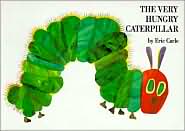
Title: The Very Hungry Caterpillar

Author: Eric Carle


About the Author: Children learn about the natural world in Eric Carle's original, charming books, which include classics such as The Very Hungry Caterpillar and Papa, Please Get the Moon for Me. Carle's vivid tissue-paper illustrations and innovations in book design have made him an author whose longevity and continued popularity are testaments to his beloved status among young readers and parents.

Age Level: preschool- 8

Synopsis: This story is about a newborn caterpillar. On every page the caterpillar finds something new to eat. As the pages turn, the caterpillar is going through the many stages before it turns into a butterfly. The caterpillar becomes bigger, fatter, and turns into a lovely butterfly.

Pre-Reading Activities: This book presents the lifecycle of a butterfly and caterpillars eat. This is a simple story that emphasizes numbers an days of the week. Eric Carle takes the concept of metamorphosis and presents it in a way that young children can understand. Carle brings humor to the development of the caterpillar, which is one of the first science concepts a child learns. Have you ever seen a caterpillar? Have you ever seen a butterfly? Have you ever caught a caterpillar and kept it to watch it go through the process of turning into a butterfly? Discuss with the class the lifecycle process of a butterfly.

Post-Reading Activities: What was your favorite part of the story? Do caterpillars really eat the things the caterpillar in the book did? What was the name of the small house the caterpillar built around himself? How long did he stay in the cocoon? What happened when he came out of his cocoon? After the reading, the students will begin a class project. There will be caterpillars in the classroom and the class will watch their process of turning into butterflies. They will keep a journal of the process the caterpillars go through. The students will be required to write a description and include drawings. For the younger students, they will have a teacher constructed work sheet. The worksheet will have the lifecycle of the caterpillar to a butterfly and the students will have to label each phase.

My Reflection: I love all of Eric Carle’s books. I especially love the illustrations! This is a great book to teach students about the life cycle of a caterpillar to a butterfly. While it is fiction, I consider this book realistic fiction. Obviously the caterpillar wouldn’t really eat all of the food shown in the book. I think Eric Carle came up with a creative way to show the life cycle and at the same time kept the concept on the level of elementary school aged children.

Barnes and Noble
Amazon

Fiction


Title: The Giving Tree

Author: Shel Silverstein


About the Author: Not only was Shel Silverstein one of the funniest children’s book authors, he was also one of the most subversive. Through his irresistible rhymes, poems, and drawings, Silverstein made children feel like they were being spoken to as adults; and adults the chance to remember what it felt like to be a child.

Age Level: 6-8

Synopsis: This story is about a relationship between a young boy and a tree in a forest. The tree always provides the boy with what he wants. As the young boy becomes older, things change and the boy grows into manhood. The tree selflessly lets the boy cut her down so that he can build a boat in which he can sail. The boy leaves the tree, now a stump and doesn’t return until many years later. The tree then tells the boy she has nothing left to give him, and the boy tells her he does not need much now that he is an old man. The tree told the boy to sit and rest, and the tree was very happy.

Pre-Reading Activities: The important of giving. How do you feel when you give? Why is it important to give? Can someone share with the class all the things the tree gives to the boy? Discuss with the class why it is important to give. Discuss the outcome of giving.

Post-Reading Activities: What did the tree give to the boy? What did the tree get out of giving to the boy? What occurred in the beginning, middle, and end? After the story, the students will be given a handout and write about an experience they had with giving. The handouts will be hung up in the hall for everyone to see.

My Reflection: This is another one of my favorite books! It teaches about selflessness and selfishness. This book tells us about the importance of giving and how good we can feel by giving to others. It also can show what feelings we have when someone does something nice for us. However, it mostly shows that we should give even if we won’t receive anything from it, except for self-reward.

Barnes and Noble
Amazon

Fiction/ Picture Book/ Stories in Rhyme-Poetry


Title: Madeline’s Rescue

Author: Ludwig Bemelmans


About the Author: Ludwig Bemelmans was a painter, illustrator, and writer for both children and adults. The Madeline books are among the most honored children's books of all time. Mr. Bemelmans died in 1962 after completing his sixth story about Madeline, Madeline's Christmas.

Age Level: 3-8

Synopsis: When Madeline falls into the river and nearly drowns, a courageous dog comes to her rescue. She names the dog Genevieve and it is now Madeline’s pet that all of the other girls envy. Genevieve goes everywhere with Madeline. Miss Clavel finds it a problem that all twelve girls are fighting over one dog.

Pre-Reading Activities: Doing good deeds can be very rewarding. Discuss with the class how important it is to help others. Discuss the importance of going out of your way to make a difference in someone’s life. Have you ever had someone do something nice for you? Have you ever done something nice for someone else? Have you helped someone in need?

Post-Reading Activities: What was your favorite part of the story? Did you think a dog would have been the one to rescue Madeline from the river? If you could give Miss Clavel advice, how would you solve the problem that there is only one dog for twelve girls? Did you think Genevieve would have puppies? After the reading, students will write a story in their journal describing a time when they helped someone in need.

My Reflection: I love all of the Madeline stories! I used to read them all when I was little! I like this story because it comical yet it has a serious side to it also. It shows that both characters (Madeline and Genevieve) are heroic. This book shows that it can be very rewarding to lend a helping hand to someone else. It shoes that doing good deeds and making a difference in someone’s life is something that we should do as much as possible in our own lives.

Barnes and Noble
Amazon

Fiction/Picture Book


Title: Mirette On the High Wire

Author: Emily Arnold McCully


About the Author: Emily Arnold McCully was born left handed in Illinois and was transplanted to Long Island, where she grew up. A tree climber, bike rider, fort builder and ball player, she also devoted hours every day to reading and drawing. She majored in art history at college and acted and wrote for the theater. She lived in Europe for a year researching her Master's thesis, also in art history. Back in New York, she took to the streets with a portfolio of sample illustrations. Early assignments were for book jackets, magazine stories and pharmaceutical ads. A poster displayed in subway cars caught the attention of a children's book editor and a new career was launched. After illustrating other peoples' texts for several years and publishing two adult novels (A Craving and life Drawing) McCully began writing her own picture books. She has been awarded the Caldecott Medal, Christopher Award, Jane Addams Award, O'Henry Award and many others. She has two sons and lives in New York and Columbia County, N.Y., where she maintains a large garden.

Age Level: 4-8

Synopsis: Mirette lives in a boarding house surrounded by actors, dancers, jugglers, and mimes. Mirette then discovers a stranger on air, a tightrope walker named Monsieur Bellini. Mirette becomes Bellini’s student and learns to tightrope walk. But then she discovers that Bellini is overcome with fear on the tightrope which caused Mirette to feel fear herself.

Pre-Reading Activities: Determination is a key concept in this book. It teaches readers that they can do anything they set their mind to. Sometimes in order to do so you have to test yourself to get over your fear(s). Have you ever done something you thought you could never do? Has anyone helped you get over something you feared? What is your biggest fear that you would like to get over? Discuss with the class,that we can get over our fears often with the help of others.

Post-Reading Activities: What was your favorite part of the book? What was Bellini afraid of? Did you think Mirette was going to walk the tightrope? Did you think that Bellini would walk the tightrope in front of the crowd? Students will write about a fear that they have overcome and share it with the class.

My Reflection: I love that a girl is the hero in this story and saves the day! I think that this story can show how to demonstrate team work and helping others. The book also has a great historical context. This book is a great model of portraying determination, ambition, and compassion. This book encourages overcoming a fear. It is a very inspiring book!

Barnes and Noble
Amazon

Fiction/Picture Book/ Folklore


Title: Joseph Had a Little Overcoat

Author: Simms Taback


About the Author: Simms Taback grew up in the Bronx and graduated from Cooper Union. He has worked as an art director and a graphic designer, and has taught at the School of Visual Arts and Syracause University. He has illustrated many children's books, including I Know an Old Lady Who Swallowed a Fly (Viking), Spacy Riddles, Snakey Riddles, Buggy Riddles, and Fishy Riddles (all written by Katy Hall and lIsa Eisenberg, Dial). His work has won many awards, including the Caldecott Honor Award Medal for I Know an Old Lady Who Swallowed a Fly and a New York Times Best Illustrated Children's Book. A father of three and grandfather of three, Mr. Taback lives with his wife in Willow, New York. Amazon

Age Level: 4-8

Synopsis: Joseph is the main character in the book, who has an overcoat that he really likes. The overcoat soon becomes old and worn, but instead of throwing the coat away he makes the overcoat into many different things. Finally the piece of overcoat becomes so small that the only thing that can be made from it is a button. Soon the button falls off and it is lost and Joseph is left with nothing.

Pre-Reading Activities: This story allows the reader to understand that you can always make something out of nothing. Sometimes people use things over and over again. People take old clothing or other things and can make them into something new. Have you ever taken something old and turned it into something new? What did you make? Did you keep what you made or did you give it to someone else? Discuss with the class how we can recycle old things to make new things.

Post-Reading Activities: What was your favorite part of the story? What kinds of clothes does Joseph make from the overcoat? If you were Joseph would you have done the same thing or would you have thrown the overcoat away? After reading the story, the students would gather something old from their homes and bring it in the next day to turn into something new. A letter would be sent to parents to let them know of the activity and
to help their child.

My Reflection: This story takes after a Yiddish Folk Song from 1977. This is an excellent story to portray that you can make a treasure out of anything. It shows that we can recycle something and make it into something new. I like the moral of the story at the end, that you can make something out of nothing!

Barnes and Noble

Fiction/Picture Book


Title: Where the Wild Things Are

Author: Maurice Sendak


About the Author: For more than forty years, the books Maurice Sendak has written and illustrated have nurtured children and adults alike and have challenged established ideas about what children's literature is and should be. Winner of the 1964 Caldecott Medal for Where the Wild Things Are, in 1970 Sendak became the first American illustrator to receive the international Hans Christian Andersen Award, given in recognition of his entire body of work. In 1983, he received the Laura Ingalls Wilder Award from the American Library Association, also given for his entire body of work.

Age Level: 4-8

Synopsis: Max is a wild child who gets sent to bed without supper after threatening to eat his mom. When he is in his room he begins to use his imagination and a forest grows. Max boards a boat and imagines himself sailing away to the land of the wild things. The monsters roared when he arrived but Max wasn’t scared. Max tames the monsters with a magic trick, they became frightened calling him the most wild thing of all and made him king of all the wild things. Max returns to his room to find his dinner, still hot!

Pre-Reading Activities: Discuss with the class the importance of using your imagination. Discuss why we use our imagination. Who uses their imagination every day? Do you travel to all different kinds of places? What do you think of Max’s imagination? Have you ever had an imagination just like Max’s?

Post-Reading Activities: What was your favorite part of the story? Has your mother ever sent you to bed without dinner because you were misbehaving? If you were max would you have been scared of the wild things? After reading the story, students will receive a blank stapled booklet. The students will create their own version of the story and illustrate it. They will use their imagination to create a unique story.

My Reflection: This book is such an inspiration for using your imagination, yet it provides a nice balance of children’s needs for imaginative thinking but has a sense of limits. This book allows children to close their eyes and create an imaginary place to travel to. They decide what it looks like, who or what lives there, and what they will do. Children can relate to Max and his thoughts. This book allows children to relate to people not understanding them or even the fact that they might not understand themselves yet. It shows that when children are upset about something or have a problem they can disappear with their imaginations and think about things on their own.

Amazon

Fiction


Title: The Polar Express

Author: Chris Van Allsburg


About the Author: The author of such bestselling children's books as Jumanji and The Polar Express, Chris Van Allsburg is a two-time winner of the coveted Caldecott Medal, as well as that National Book Award and the Regina Medal for lifetime achievement in children's literature.

Age Level: 5-8

Synopsis: A young boy stays awake at night listening for the jingle of Santa’s sleigh bells on Christmas Eve. He suddenly hears a loud rumbling outside on the street as a magical train called The Polar Express pulls up in front of his house. The boy goes up to the train and is invited in by the mysterious conductor. The train is filled with children, all dressed in their pajamas, who drink hot chocolate. This magical train ride takes the boy on a journey to the North Pole to receive a special gift from Santa.

Pre-Reading Activities: Discuss with the class the history of Christmas, traditions, and how other cultures celebrate Christmas. What do you do on Christmas Eve? Do you leave anything out for Santa Claus? What is the one special gift that you want Santa to bring you on Christmas? On Christmas Eve, Santa Claus visits everyone’s house to deliver gifts. This story is about the magical hope of Christmas and the boy who keeps believing in Santa Claus even when his friends begin to doubt his existence.

Post-Reading Activities: What was your favorite part of the story? What would you have asked Santa for if you were chosen? Would you have asked for a bell? After the reading, the students will write about what gift they would have asked Santa for and then draw a picture of the gift. The teacher could also have a lesson on the five senses that are incorporated in this book

My Reflection: This is one of my favorite books. I love the magical essence of this book. I think that it is so important that we believe in something and as a child, children need to have something to believe in. It is part of having an imagination. This is a story that provides children with a magical experience and a story that allows children to keep believing.

Barnes and Noble